Introduction to UV-Protective Fabrics
Mar 13, 2026
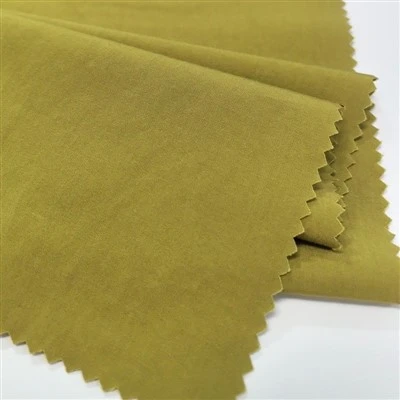
UV-protective fabric is a functional material designed to safeguard the skin by shielding against UVA and UVB radiation; it is also referred to as a UV-shielding agent. The protective function of this fabric is primarily achieved by incorporating UV-blocking agents during the spinning process. It is broadly categorized into three types: yarn-integrated protection, additive-enhanced protection, and coating-based protection. Among these, the yarn-integrated protection technique-which embeds UV-blocking factors directly into the yarn at the source-has emerged as the dominant technological approach. my country adheres to the GB/T 18830-2023 standard, which mandates that a product must possess a UPF (Ultraviolet Protection Factor) value greater than 30 and a UVA transmittance rate lower than 5% to be officially labeled as a UV-protective product; the highest classification under this standard is 50+. High-quality yarn-integrated UV-protective fabrics are capable of maintaining stable sun-protection performance even after enduring hundreds of machine-washing cycles.
The core technologies involved include the incorporation of inorganic materials-such as zinc oxide and titanium dioxide-as well as organic compounds like benzophenones. Notably, the "Bingyin Yarn" technology developed by Donghua University allows for increasing the concentration of titanium dioxide within the yarn to 8%, thereby achieving a UPF value exceeding 1000. Newer technologies utilize microencapsulation techniques to embed natural mint extracts, thereby delivering a multifaceted functionality that encompasses UV protection, cooling sensations, and antimicrobial properties; the walls of these microcapsules measure a mere 100 to 200 nanometers in thickness. Furthermore, sun-protective fabrics featuring a dual functionality-combining photochromism (light-induced color change) with UV shielding-have also begun to emerge [7]. The application landscape for these fabrics is characterized by trends toward diversification of usage scenarios and functional integration. Their utility has expanded beyond traditional outdoor sun protection to encompass a wide array of contexts-including fashion apparel and leisure travel-and is increasingly being combined with complementary functions such as heat shielding, cooling effects, and moisture-wicking/quick-drying capabilities.